

While planning a dive, you might have considered opting for the side mount method over the back mount. The reason divers consider side mount over traditional back mount dives is because of the hype that has been created by those who have tried the method. Divers often feel freer and less bound by equipment during side mount dives, but deciding on the method isn’t purely on personal preference.


We aren’t saying the personal choice isn’t a factor for side-mount divers, just that there are other factors that come into play as well. If you are deciding between the two methods, you first have to understand the differences and why each method is preferred for certain dives. Below is a breakdown to help you understand the differences:
What Is Sidemount Diving?
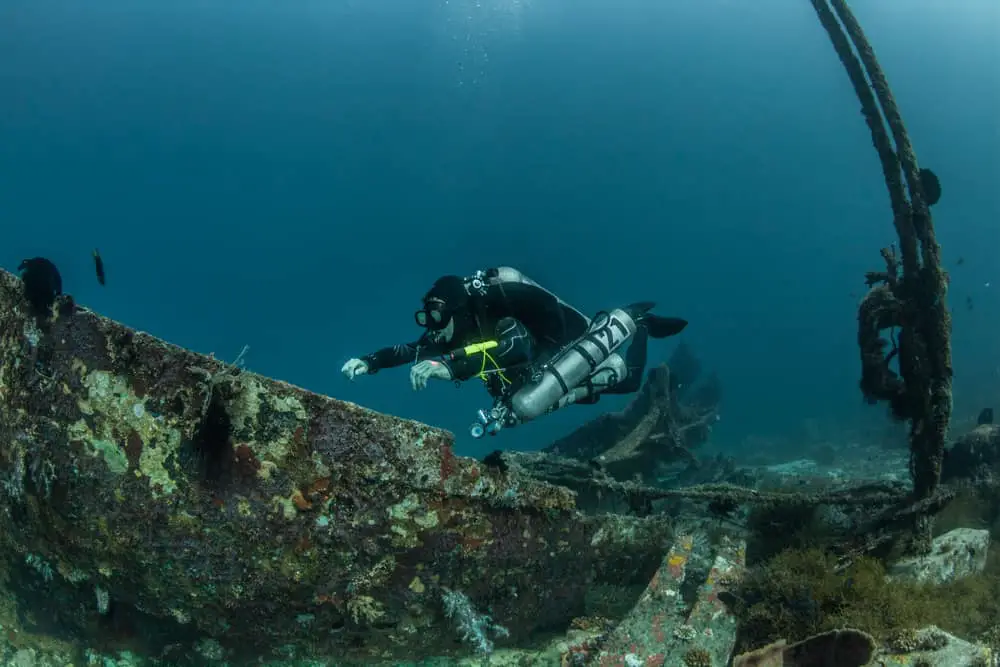
Sidemount diving is the method of diving where the diver carries their cylinders clipped to their sides rather than on their back. The cylinders are clipped onto the diver right below the shoulders and go down to the hips on either side.
This configuration of equipment was originally used for advanced cave diving. The way the tanks are placed alongside the body gives divers the ability to fit through tight sections of caves with ease. You may think that tanks on the side would make it more difficult to maneuver in a tight space, but side-mounted cylinders can easily be unclipped when necessary, unlike back-mounted ones.
This form of diving started gaining traction with technical and decompression divers; the ease of movement with quick access to tanks made it easy to move around wrecks as reliable gas redundancy did for deeper dives. This growth in popularity for the method trickled down to recreational diving too, making it easier for recreational divers to get certified for side mount diving as well.
What Is Backmount Scuba Diving?
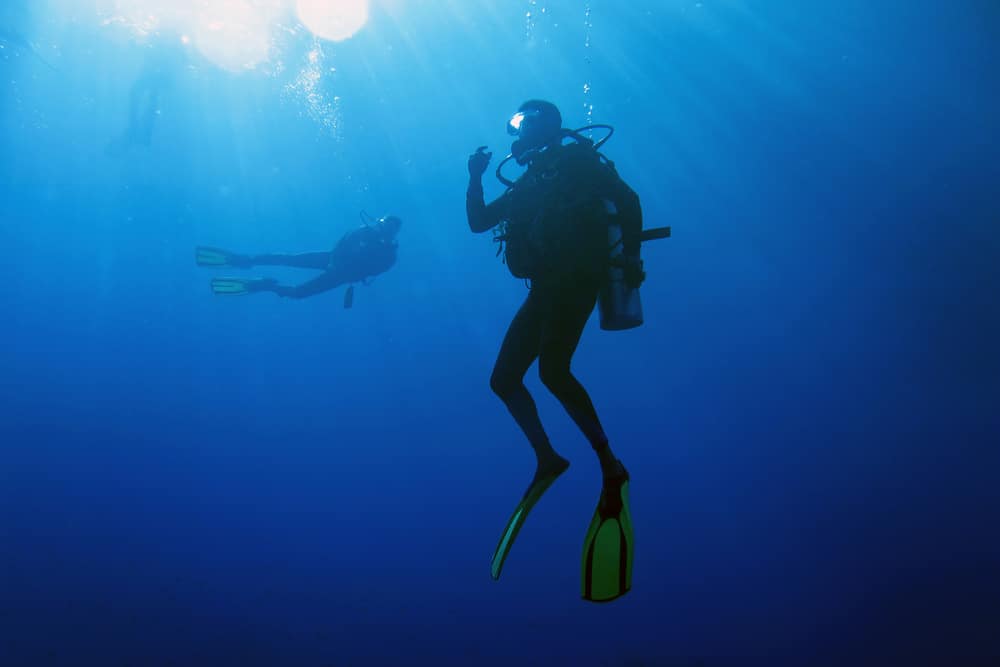
When you think of scuba divers, you think of a person in a wetsuit, wearing a mask and carrying one or two air tanks on their back. That is backmount diving.
Backmount diving is the traditional way of diving. The gear is configured so the diver carries their cylinders on their back. It is a tried and true method that divers have been using for most types of dives.
This type of method is the most common, especially for recreational dives. For this reason, you will notice that equipment and training for it is readily available anywhere where dives can happen.
Advantages and Disadvantages of Sidemount Diving
Though side mount diving is preferred by many, like all methods it still has its disadvantages. Here are some of the biggest advantages and disadvantages of side-mount diving:
Advantages
- The biggest advantage of side-mount diving is the ability to move around freely and flexibly. You don’t have to keep adjusting yourself to maintain balance. The tanks on your side make you more streamlined.
- If you struggle with carrying around weight on your back, especially before dives, sidemounts don’t have that problem. You can clip on the cylinders once you are in the water.
- Easy access to valves means any kind of problem can be identified, isolated and fixed without any inconvenience.
- You can remove and move tanks around, making it easy to move around and squeeze through tight spots.
- You have much more balance and stability in the water because you are carrying the weight of the tanks at your center of gravity.
Disadvantages
- Diving from boats can get a little difficult because of the gear involved for side-mount diving. The cylinders are clipped on in the water, so it can be difficult to lower them in from a boat.
- To maintain balance underwater, you need to keep switching the regulator to equalize the gas in the tanks on either side.
- The set up of the rig has to be done very meticulously with the expertise needed to give you the correct balance and performance underwater.

Advantages and Disadvantages Backmount Diving
Though this is the most popular way of diving, it still comes with its drawbacks. Here are the biggest advantages and disadvantages of back mount diving:
Advantages
- Because of its popularity and wide usage, there have been a lot of advances made with backmount diving equipment.
- There is a lot of equipment and training that is easily available. Since the method has been around for so long, training has become much easier and works for most people.
- You are using the unused space across your back; this is an advantage, especially during deeper dives when you need to carry multiple tanks. You don’t need to move the tanks unlike in wreck or cave dives, so it’s easier to just have them mounted on your back.
- For boat dives, especially when the water is a little choppy, backmount configurations are a lot easier to get on and off. You don’t need to be in the water, struggling to clip on your tanks.
- Gas is easily managed because you are breathing from both tanks at the same time.
Disadvantages
- You are a lot less flexible in the water because of the tanks attached to your back.
- The equipment is quite heavy; walking around with the cylinders on your back can be cumbersome.
- If there is a problem with any cylinder, you have to render the remaining gas in it since you can’t remove it and fix the problem.
Why Would You Sidemount Dive In The Open Ocean?
Sidemount diving in open water is preferred by divers who have trained well with the equipment and find dives with it easier. Once they can figure out how to work the equipment, the freedom they get underwater is much more preferable. Sidemount diving ensures more speed and agility, and better balance is desirable, especially in decompression dives.
Is Backmount Diving Only For Open Waters?
Backmount diving is used in all waters, not just open water. Backmount diving is preferred for boat dives, but it is used in all other types of diving as well. Whether it is wreck diving, shore dives, boat dives or any other kinds, back-mount diving has been the tested way that people have been doing it since the beginning.
Is Sidemount Diving Only Good For Caves?
Sidemount diving has been growing in popularity for all forms of dives. Though the method was originally created for cave diving, that is no longer the case. Because of all the advantages of using this method, technical divers, particularly wreck divers took on the method as well. The maneuverability with this configuration has helped wreck divers get into spaces they otherwise wouldn’t be able to reach.
Decompression divers picked up the method because they preferred the balance they got during decompression stops because of the side-mount method. Eventually, sidemount diving made its way to recreational divers as well; they felt they could move more easily and could identify problems with valves with more ease because of the easy access right under their arms.
Sidemount diving is good for most dives; plus you’re not lugging around heavy tanks on your back before getting into the water – rather, you can get into the water and simply clip on your cylinders to your sides with ease!
Do You Need Special Certifications or Courses for Sidemount Diving?
The short answer is yes, you do. Any time divers are working with new equipment or a new kind of dive, it is imperative to get training and certifications for them specifically.
The certification teaches divers how to configure and assemble the equipment as well as balance with it properly underwater. Any kind of change from your regular diving method will require you to practice underwater before you are ready to dive. Certifications also ensure that you know how to deal with problems with the specific equipment should they come up.
Final Thoughts
Either method that you choose will work out for you, just go through the advantages and disadvantages of each method and try them out before deciding! However, if you’re looking into deep diving often, you should ditch both these methods and maybe consider rebreather diving instead!